



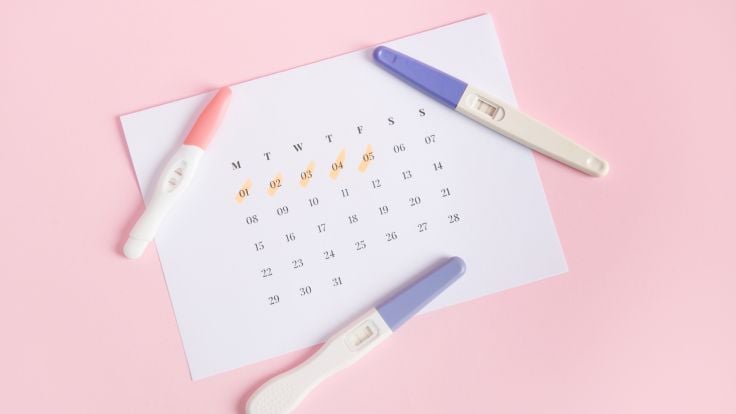
It’s not uncommon in Catholic spaces to stumble across families poking fun at how everyone knows they’re Catholic due to their large family size. “I guess we’re just really bad at NFP!” they remark with a smile.
Of course, one of the many wonderful things about the Church’s stance on openness to life is that married couples may experience a surprise pregnancy. Each of these families goes on to say they couldn’t imagine life without this little one. They’re grateful God blessed them with this gift of life even though they weren’t planning for it.
We can acknowledge the unexpected joy that may come with Natural Family Planning . . . while also acknowledging that maybe we should tone down this “being bad at NFP” business.
Spouses’ ability to become one flesh and to bring new life into this world, co-creators with God, is one of the most powerful gifts humanity has been entrusted with. This gift cannot be taken lightly. It demands thought, prayer, and discernment. Even as we remain open to surprises, we should be in the habit of consulting God on how to use that great gift.
Consultation is more than trusting that God is in charge. It should also include conversing with your spouse, reflecting on your current familial state, bringing all of this to God in prayer, and potentially seeking guidance from a spiritual director or pastor.
We must do our best to wisely discern what God is asking of us and not allow our passions to take the driver’s seat. Chastity is important for each person, including the married one. Marriage will come with seasons where it becomes physically necessary for couples to abstain from sexual intimacy and instead express affection, love, and service in other ways. Men and woman who don’t learn how to do this will burden their spouse—and themselves, too.
By all means, let us be lighthearted about the struggles of NFP; it can help us not to feel so alone in the seasons of abstinence and may lighten the burden they can bring. But we should never take co-creation lightly.
Married couples today are faced with many temptations to reject God’s design for co-creation. The most common is the temptation to abuse our will through contracepting, sterilizing, or doing IVF. But we must be equally aware of the temptation to disregard our will altogether and neglect our ability to discern, through prayer, reason, and communication, when it is time to have another baby. The former is tempted to exalt themselves and act against nature; the latter is tempted to diminish themselves and reject the role God invites them into.
Ultimately, virtue often lies in the intermediate rather than in extremes. We do have power, but this power has limits. God has given us freedom—freedom to prudently discern and take action towards the good. We are not gods who get to decide our own nature. We are also not beasts who lack the rational ability to reflect on God’s will and choose our own course.
We owe it not just to God, but to ourselves and our families, to be intentional and considerate in this regard. Bringing a new human being into the world, who will go on to exist forever, is not a small deal. This doesn’t mean every child must be conceived with the conscious intention and desire to conceive him. But it means, as chastity demands, that all marital affection should proceed from the state God is calling our family to be in.
Perhaps that is a season of abstinence and waiting due to physical or other grave constraints. Or maybe it is a season of joyful anticipation and full desire to conceive another baby. Or it may be on a spectrum in between: I’m not trying to achieve pregnancy, but if it does happen, our family would be ready and excited.
But we must exercise extra-careful discernment in circumstances that may threaten a child’s flourishing—such as extreme financial stress, unhealthy maternal conditions, or deep emotional unavailability.
Indeed, though most people recognize the financial responsibility a new child brings (in fact, many in the West overestimate it!), too few understand the gravity of children’s emotional and social needs. The first three years of a child’s life, especially, are critical in his development, both physically and emotionally. A child who is not consistently met with attunement, attention, and connection during these years may very well suffer lasting difficulties in emotional and social development.
Lastly, we should be aware of how NFP “failure” jokes can portray NFP to outsiders, or to younger Catholics awaiting marriage. When practiced diligently, NFP does, in fact, work. Publicly painting NFP as defective—or worse, a kind of hoax that we’re all in on—may cause Christians to feel vindicated for using contraception or lead younger Catholic couples to resort to it.
Ultimately, NFP remains a witness to the Church’s stance on the beauty and sacredness of life, and the procreative end of marital intimacy. Sexual intimacy is not something to be approached willy-nilly, despite what secularists proclaim. In the end, a couple’s use of NFP fulfills Solomon’s wisdom:
For everything there is a season, and a time for every matter under heaven . . . a time to embrace, and a time to refrain from embracing (Eccles. 3:1,5).