



In this clip, Cy Kellett welcomes Gilbert to discuss the biblical basis for the cessation of sacrifices in Catholicism. Jimmy Akin explains how Jesus redefines the concept of the temple and the implications for the Jewish sacrificial system.
Transcript:
Caller: In your belief, like, where in the Bible did it show that God wanted us to stop sacrificing stuff and why did we stop?
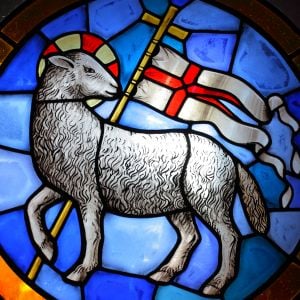
Jimmy Akin: So there are several passages that deal with this. Now, one of the things you have to understand about Judaism is God indicated that all of the sacrifices that the Jews were to give him were to be. Were to be offered at the temple in Jerusalem. So Jews are not supposed to offer anything to God that is not offered at the temple. And then when Jesus shows up, he identifies his own body with the temple, like at the beginning of John. In John 2, he tells his opponents, Destroy this temple, and in three days I’ll build it again. And John tells us he’s referring to his own body. You know, he’s referring to his death by crucifixion. His body is a temple. His body is going to be destroyed, but then he’s going to build it again or raise from the dead in three days. So he’s pointing to his own death and resurrection, but he’s conceiving of himself as a temple. And it’s a greater temple than the temple in Jerusalem. Because in three of the four Gospels, he predicts that the Jerusalem Temple will be destroyed. That’s in Matthew, that’s in Mark, that’s in Luke. In all three, he predicts the Jerusalem Temple is going to be destroyed. And he connects the reason it’s going to be destroyed to the fact that it’s not bearing the spiritual fruit that God wants. That’s the purpose of the parable, of the cursing of the fig tree. It’s not a parable, but it’s an enacted parable where Jesus finds this fig tree that has all these leaves, this outward show, but there’s nothing to eat on it. So as a fig tree, it’s empty. And he uses it. And you can tell based on how it’s juxtaposed with the temple in, like, for example, Mark, it’s a symbol of the temple. And so it’s like, because this fig tree is not bearing fruit, Jesus curses it. No one is ever going to eat fruit from you again. And that is also a curse on the Jerusalem Temple, whose prophecy, who he then prophesies it’s going to be destroyed. And that means an end to the Jewish sacrificial system, because this is the only spot where Jews are supposed to offer sacrifices to God. And Jesus says this temple is going to be destroyed, so there’s not going to be any more Jewish sacrifices offered here. And that’s part of the meaning when Jesus is on the cross. And when he dies, the veil covering the holy of holies in the temple, it gets torn in two from top to bottom. So that means God tears this. And this is understood in part as a sign. God’s leaving the temple. He’s leaving the holy of holies. This site is not where God’s going to hang out anymore because the supreme sacrifice of Jesus that replaces all of the sacrifices of the Jewish temple has now been made. And that point is then picked up in the later books of the New Testament that are letters. So for example, in 1 Corinthians 5, St. Paul says that Christ, our Passover lamb, has been sacrificed. So, well, if Christ is our Passover lamb and he’s been sacrificed well, then we don’t need other Passover lambs anymore. Wouldn’t you say, Psychellit? I would say, yeah, we’ve already got the Passover lamb. We need sacrifice. That was Jesus Christ. And then similarly, if you look like in John 1, when John the Baptist sees Jesus, he says, behold the lamb of God who takes away the sins of the world. So if Psychelit, if Jesus is the lamb of God who takes away the sins of the world, do we need to be sacrificing other lambs?
Caller: No, the job is done.
Jimmy Akin: Yeah. And these points are made explicitly in the book of Hebrews where the author of Hebrews talks about how Jesus and his sacrifice superseded all of the Jewish sacrifices. He talks about how the blood of bulls and goats could never take away sins. Not for reals, but Jesus blood does that. So that’s what we need. He talks about how there’s been a change in the system of laws that govern these. He talks about how Christ has offered his sacrifice for us so we don’t need these Jewish sacrifices. And then when the temple gets destroyed in AD 70, just like Jesus said it would be, that kind of puts the exclamation point at the end of the sentence. No more sacrifices. Jesus has done what we need. And so that’s why Christians historically have not looked to the Jewish sacrificial system as part of their religious worship. We look to the sacrifice of Christ, which is manifested, including in the mass. But it’s the sacrifice of Christ that is what we as Christians look to, not these animal sacrifices that according to like the author of Hebrews never really did anything for us. Anyway.
Cy Kellett: Gilbert, for you and for. I can’t remember if you said fiance or girlfriend, but because of her interest, I would like to send.
Caller: Fiance.
Cy Kellett: Fiance. Okay. I’d like to send you a copy of Jimmy’s small but powerful book, the Words of Eternal Life, True Happiness and Where to Find It. I think it will be helpful in your conversations and I think you’ll like it very much. So if you hang on and give us an address, we will send that to you. Michael in Tennessee is up next. Michael, go ahead with your question.