



G.K. Chesterton noted that the two things we’re not supposed to talk about at parties—religion and politics—are actually the two most important subjects of all. Religion is about love of God, and politics, at the end of the day, is about how best to love our neighbor.
This forms the basis of Jesus’ “Great Commandment”: “You shall love the Lord your God with all your heart, and with all your soul, and with all your mind, and with all your strength.’ The second is this, ‘You shall love your neighbor as yourself.’ There is no other commandment greater than these” (Mark 12:30-31).
At the end of the day, we are called to love God and love people. It’s the only thing that carries over into the afterlife.
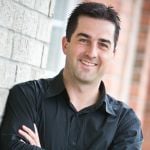
Nearing the end of his days, former Nebraska senator Ben Sasse sat down with Scott Pelley on CBS’s 60 Minutes recently for a conversation about how to do just that: love God and love people.
At fifty-four, Sasse is battling metastatic pancreatic cancer. Doctors gave him three to four months back in December. Thanks to a “miracle drug,” he’s borrowed a little more time, and he knows it. The treatment has marred his visage somewhat, making his identification with the suffering Christ more apparent to some observers. It’s not intentional, of course, and Sasse isn’t concerned with proffering an “image” of any kind—only substance.
Sasse has done a couple of these interviews (most notably with Ross Douthat of the New York Times), and this one was just as raw, reflective, and refreshingly free of the usual political spin. It felt like a modern-day memento mori manifesto.
Memento mori (Latin for “remember your death”) is the ancient Christian practice (now back in vogue) of keeping the reality of our death front and center—not to depress us, but to wake us up. Ben Sasse put it plainly: we’re all “on the clock.” The mortality rate is 100 percent, cancer or no. As the late Jim Morrison (frontman of The Doors) once sang, “no one here gets out alive.”
But Sasse isn’t quite raging against the dying of the light, Dylan Thomas-style. He’s using the remaining daylight to tell the truth: about himself, his family, his country, and his God, in what he calls “a moment of profound confusion of what it means to be human.”
The terminal diagnosis, Sasse said, has been “a touch of grace.” “I tell a lot more truth to myself than I used to,” he admitted, noting that “the lie is that I’m the center of everything, and that I’ll live forever.” How many of us live that lie—postponing that confession, that difficult conversation, that act of love, for a mythical “someday”? Sasse’s situation reminds us that “someday” may never come, but the day of our death does. It’s why some saints, like St. Jerome, kept skulls on their desks. “What am I doing with the time I’ve been given, whether short or long, for which I must give an account?” Will we, like Sasse, use whatever time remains to speak and live the truth more boldly?
Sasse, a Reformed Christian, dropped this “tweetable” gem: “There are no maverick molecules in the universe.” Nothing escapes God’s sovereign care. Sasse’s cancer, painful and unwelcome as it is, “was not a surprise to God,” he said. For Catholics, this resonates deeply with our own faith in divine providence. Our lives unfold under the gaze of a Father who sees the end from the beginning. Whether it’s a terrifying medical diagnosis, the sudden loss of a job, the collapse of a relationship, or any of the smaller splinters of the cross in our days, nothing slips through the cracks.
God doesn’t cause evil, but he permits it. And he wastes nothing. “We know that in everything God works for good with those who love him, who are called according to his purpose” (Rom. 8:28). The question isn’t “Why me?”, but “How will I respond with greater trust in God’s mysterious purposes?” Sasse chooses the posture of gratitude. Catholics can do the same, uniting our sufferings to the cross of Christ and trusting that the same God who raised Jesus bodily from death has the final word over every cell in our bodies, which he will also resurrect on the last day.
Now to the politics part. America, the ex-senator noted, is materially the richest country that has ever existed on the face of the earth. We enjoy abundance our ancestors could scarcely imagine, yet we suffer from profound spiritual poverty. This diagnosis echoes the piercing observations of St. Teresa of Calcutta. Mother Teresa, walking the streets of one of the world’s poorest cities, nevertheless said she found greater poverty in the West: the loneliness, the emptiness, the lack of love. Full bellies and empty souls.
Sasse didn’t shy away from one of the starkest symptoms of that spiritual poverty: the collapse of natalism across the industrialized world—except, as Sasse noted, among committed religious communities. “We’ve stopped having babies,” he observed. “We’ve decided that being distracted by a dopamine hit around Candy Crush might be a good way to spend your time. Not if you’re a full human.”
From a Catholic perspective, this isn’t just a demographic crisis. It’s a rejection of the fundamental vocation to which most people are called: marriage and family. Babies are not inconveniences or lifestyle accessories (“Babies have always been inconvenient!” Sasse noted.) They are the natural fruit of the free, total, faithful, and fruitful self-gift of spouses in the sacrament of matrimony. Having a child is, as Sasse put it, “a bet on the future”—an act of hope in the goodness of God’s creation and the promise of eternity. When a culture trades the nursery for the screen, it reveals a deeper despair: a refusal to pass on the gift of life because we’re no longer sure life is worth living.
This ties directly into Sasse’s broader warning about our flight from genuine human contact. It’s not just in the dating scene or the bedroom; it’s everywhere. People are glued to their devices, living more in the digital ether than in the flesh-and-blood reality of their neighborhoods. We text instead of talk. We curate online personas while our real relationships atrophy. The result is a profound loneliness that no number of likes can cure.
Sasse called us back to what the philosopher Edmund Burke termed “little platoons”—those small, organic communities of marriages, families, neighborhoods, and friendships that form the bedrock of a healthy society. Catholics have always understood this. The domestic church begins in the home, radiates into the parish, and strengthens the broader community. The antidote to digital isolation is real presence, and the Real Presence. It’s Mass with the family of faith. It’s Sunday dinner with kin. It’s knocking on a neighbor’s door. In an age of avatars, the Incarnation stands as a permanent rebuke: God took on flesh and blood. We should be living lives together in the flesh, too, in what Sasse called the “thickness” of community.
Sasse also offered a brief but important reminder about the right ordering of government. Our rights, he stressed, do not originate with the state. They come from God and are pre-political—mediated through natural law and divine revelation. Government is only our shared project to secure those God-given rights. This is music to Catholic ears, echoing the Church’s long tradition of subsidiarity and the primacy of the human person created in the image of God.
The most moving moments of Sasse’s interview were intensely personal. Sasse spoke through tears about his children growing up without him. He likely won’t walk his daughters down the aisle, or place a fatherly hand on his son’s shoulder as the boy becomes a man. Yet he is entrusting them to God—the same God who holds every molecule in place. For Catholic parents, this is a powerful examen: how tightly do we clutch our loved ones, as if we could control every outcome? Sasse’s example invites us to hold them, but with open hands, doing our best to form them in virtue and faith, then releasing them into the hands of Providence.
Ben Sasse’s 60 Minutes appearance conformed with how he wants to be remembered: as a husband, a father, and most of all a believer, staring eternity in the face and choosing to live the time left with clarity and courage. He hates cancer, but he’s grateful for the way it’s forced him to tell the truth. Catholics can take that same spirit into our own dramas—whatever diagnosis, disappointment, or detour life throws our way. No trial surprises God. How will we “redeem the time” (see Eph 5:16)? Will we love more fiercely, forgive more quickly, and witness more boldly?
We’re all on the clock. The mortality rate is still 100 percent. Thanks to a dying ex-senator on national television, more of us might actually start living like it.
Image credit: Gage Skidmore via Flickr, CC BY-SA 2.0.