



Dear Drabby . . . or Drewby . . . or dear Drew Babby,
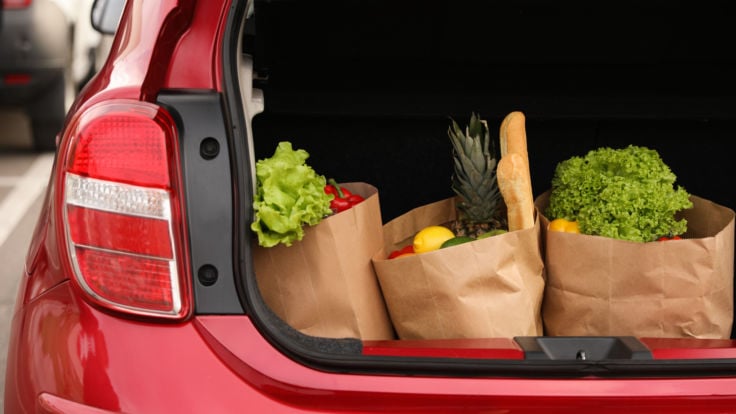
How am I supposed to raise a huge family when nobody can afford groceries? How do you do it?
Love,
天主教兔 (Catholic Rabbit)
* * *
The Catholic faith meets grocery affordability where it intersects with how to sustain a family—likely a large one, given the Church’s proscription against sterilizing ourselves and/or killing our babies.
My wife is one of Hannah’s children, which makes me Hannah’s son-in-law. We’re raising six kids under eight, and we love doing it. We’re affording groceries. And we’re hoping God blesses us with many more (kids and groceries).
How do you do it? The answer, I propose, comes out of one basic principle. The practical tips come after.
Disclaimer: I mean here only to share what’s working for the families I know. There are a thousand reasons why this or that reader might insist it wouldn’t work in this or that case.
The Principle: Family Togetherness
Over about ten years of childrearing, I have found that the cost of groceries is inversely proportional to the amount of time families spend together.
Is this Boomer “eat at home” finger-wagging? Sort of, but don’t put the cart before the horse. It is good for husbands and wives to be together, and it is good for children to spend time with their parents. Adam exults upon beholding Eve, whom God made specifically as a partner for him (Gen. 2:18-22). Marriage with children is a symbol of the triune God. So families should prioritize and pursue togetherness even before cost-consciousness comes in.
That said, togetherness does help with grocery bills. Bulk-buying, preparing family meals, three squares instead of endless snacking—these can all be considered the fruits of prioritizing family, not just budget hacks.
The families I know make major life decisions with this perspective in mind. Consider the modern lifestyle: father, mother, children separated all day at work and school. Eating separately costs more. So do convenient breakfasts and dinners.
As for major life decisions, homeschooling brings back the children, and working from home brings back the parents. Usually this means Mom earns a lot less, but by no means works less, than Dad. Opportunities open up for communal meals, and spending drops.
People don’t stumble into this kind of lifestyle. It is uncompromisingly intentional. Is it hard to effect sometimes? Yes. Will there be trade-offs? Of course. But this post is about grocery affordability, and the families I’m talking about spend less on groceries.
The Nitty-Gritty
I get it—the thought of feeding six, seven, eight kids is intimidating. But remember that kids don’t spring up all at once. By the time you need to figure out how to afford six, you’ll already have figured out how to afford five, and before that four, and on and on all the way down. Call it the Lagomorphic Rule, or Belsky’s Law of Bunnies.
Nor do you have to go full “homeschool” or “work from home” to bring costs down. Instead, try even one of the bullet points below. Either we do them or Hannah’s other relatives do.
- Why get the formula when the milk is free?
- Protein and fat. When food satisfies the stomach, you need less of it.
- Soak and ferment. Beans, nuts, and grains are more digestible when they’re prepared right. Kids will tear through a bag of Pepperidge Farm’s stuff, but one sourdough bagel works all morning.
- Learn how to make bread, ice cream, kombucha. Churn your own butter. Mill your own flour.
- Food-train the babies. A week or two of loving attention and persistence knocks out enduring bad habits like throwing or rejecting food (i.e., wasting your money).
- Stamp out picky eating. Our kids eat everything—salads, organ meats, sushi, exotic cheeses, you name it—because we withhold sugar until two years old.
- Cloth diapers. Disposables are mind-blowingly expensive. And then . . .
- Cloth toilet paper. People do this. Much cheaper than actual paper. Cleaner, too.
Yes, groceries cost money, but be encouraged. The fear of affording kids didn’t stop me and my wife from having them, and we are overjoyed. It doesn’t have to stop you, either.